What is team duplication?
Team duplication is the process of turning useful knowledge and working methods into a clear system that other people can understand, follow, and teach.
Team duplication
Put your onboarding, training, scripts, product information, links, files, videos, and common answers in one organized hub. Give every new member a clear place to start and every leader one reliable place to send them.
Last reviewed: 2026-07-13
Build your team hub Check your team readiness
A team may have excellent information and still struggle to duplicate it when that information is scattered or depends on one person being available.
Leaders spend time resending links, explaining first steps, and answering questions that have already been answered.
Training lives in group chats, videos, browser bookmarks, shared drives, screenshots, and personal notes.
People receive too much information at once without a clear order or an obvious next step.
Old scripts, outdated links, and conflicting documents create confusion and reduce confidence.
When the system depends on one person, team members can become stuck waiting for an answer.
Give everyone one dependable hub for the resources they are expected to use.
Show new members what to read, watch, complete, and do during their first days.
Group product information, scripts, videos, links, documents, and common questions by purpose.
Replace or update the resource in one central location instead of distributing another disconnected copy.
Help members find routine information independently while preserving personal support for situations that genuinely need it.
Give developing leaders a repeatable structure they can use with their own members.
Team duplication means turning what works into a clear, repeatable process that other people can understand and follow.
It is not about copying someone's personality. It is not about making every person communicate in exactly the same way. It is not a guarantee of team growth or business results.
It is about giving people access to the same starting steps, current resources, helpful examples, and expectations, without requiring one leader to explain everything manually every time.
A welcome message, expectations, support contacts, and an explanation of how to use the hub.
The first few actions a new member should complete without becoming overwhelmed.
A simple sequence of training, practice, follow-up, and support.
Current product information, reference materials, official resources, and common questions.
Approved examples that help members begin natural conversations without forcing everyone to sound identical.
Current videos, links, PDFs, pages, and supporting information.
The repeatable activities, meetings, reviews, and habits that support progress.
Answers to common questions with clear instructions on when to contact a leader.
Recent changes, revised documents, announcements, and reminders.
How to request help, attend training, or speak with the appropriate person.
A useful system does not remove leadership or personal connection. It protects leaders from repeating routine information so they can spend more time coaching, listening, and helping people with situations that require human judgment.
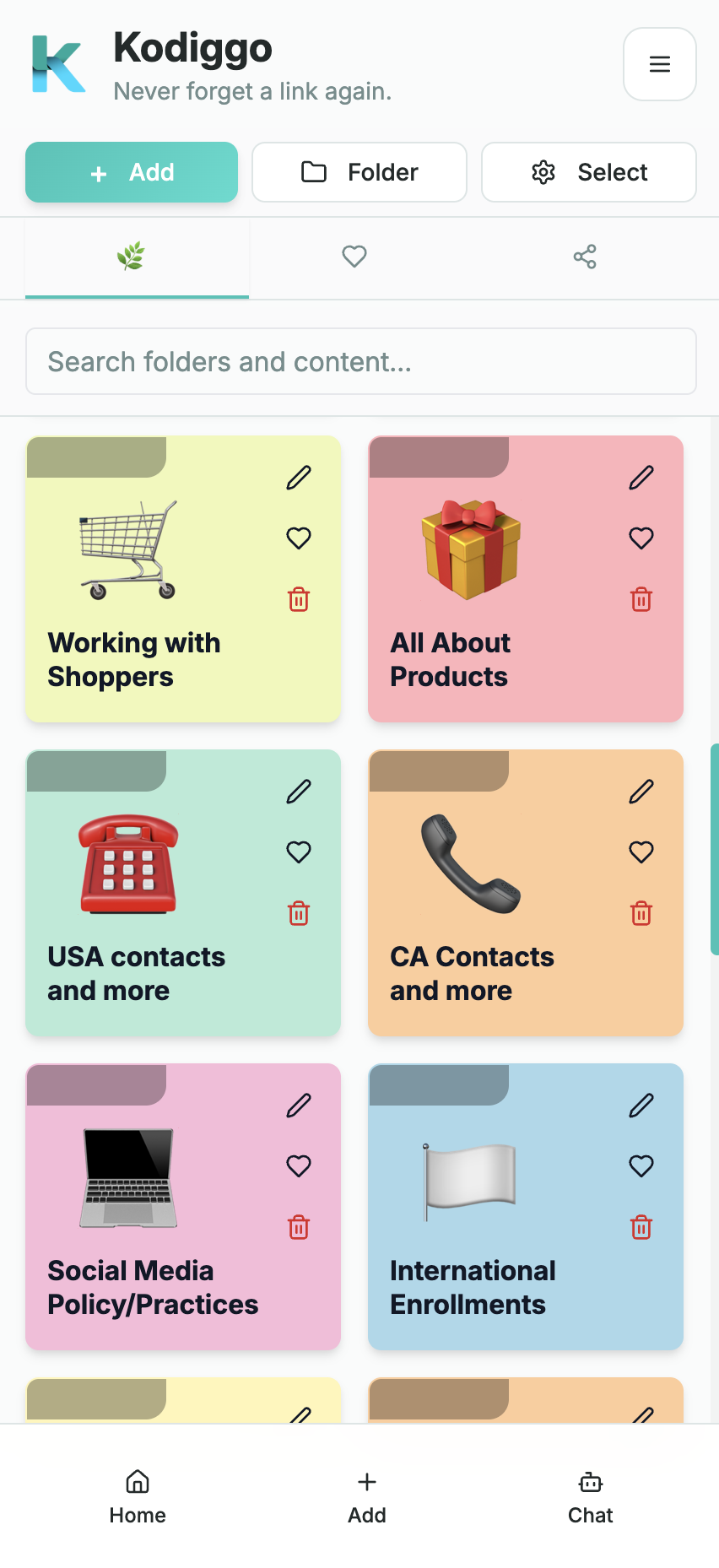
Team duplication software should make the routine parts of a process easier to find and repeat. In Kodiggo, leaders can organize the starting steps, training, scripts, product resources, files, videos, links, and common answers that every member needs.
The hub supports consistency without forcing every person to communicate in exactly the same way or removing the need for coaching.
List the questions, instructions, videos, links, and explanations you send most often.
Organize resources around the member's journey instead of building a complicated library all at once.
Tell new members where to begin, what matters now, and what can wait until later.
Ask a small group to complete the process without extra explanation and observe where they become confused.
Remove outdated resources, clarify unclear steps, and update the system as the team learns.
Team duplication is the process of turning useful knowledge and working methods into a clear system that other people can understand, follow, and teach.
No. Examples and approved scripts can provide guidance, but people should still communicate naturally and follow the policies of their organization.
No. Kodiggo organizes reusable information. Leadership, coaching, accountability, encouragement, and judgment still require people.
Start with the information you repeat most often: welcome steps, essential links, basic training, common questions, and support instructions.
Only what they need for the next meaningful step. A clear sequence is usually more useful than giving someone an entire library on their first day.
No. Kodiggo can support organization and consistency, but participation and business outcomes depend on many other factors.
Team duplication software helps turn repeatable information and processes into a structure other people can understand and follow. Depending on the product, that may include onboarding, training, scripts, files, links, videos, instructions, or common answers. Kodiggo focuses on organizing those reusable resources.
No. Kodiggo does not calculate commissions, manage genealogy, or operate a compensation plan. It is a resource and knowledge hub for onboarding, training, scripts, links, files, videos, notes, and repeatable answers.